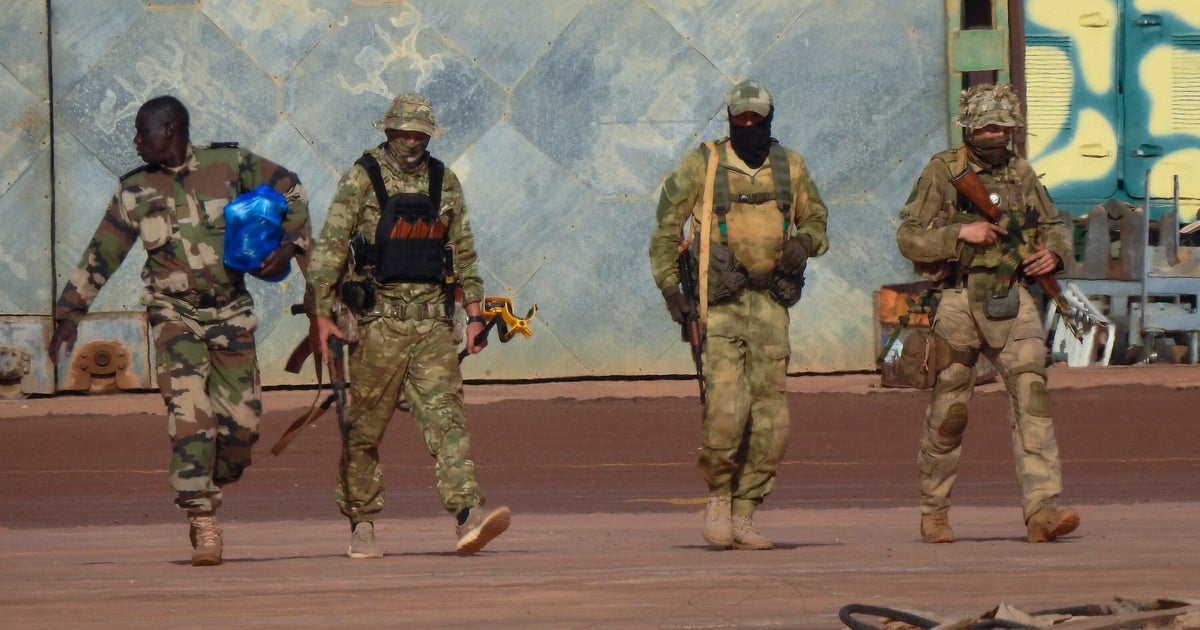
Mali's northern region of Kidal, long a flashpoint of insurgency and foreign intervention, is witnessing a quiet but strategic reversal: Russia’s Africa Corps has confirmed its withdrawal from the area. The pullback follows a series of coordinated attacks by armed groups, signaling renewed instability and challenging the narrative of military control promoted by Mali’s junta and its foreign allies.
This retreat isn’t just a logistical shift—it’s a geopolitical recalibration. For months, the Africa Corps, widely believed to be linked to Russian special operations forces or private military contractors (PMCs), positioned itself as a stabilizing force in Mali’s fight against jihadist and separatist threats. But recent violence, including ambushes and drone strikes targeting foreign troops, has exposed operational vulnerabilities.
The withdrawal from Kidal suggests a reassessment of risk versus influence—a rare public retreat by a force that has otherwise projected relentless forward momentum across Africa’s Sahel region.
Why Kidal Matters in the Sahel Conflict
Kidal is more than just rugged desert terrain—it’s a symbolic and strategic nerve center in northern Mali. Historically a stronghold of Tuareg separatist movements like the National Movement for the Liberation of Azawad (MNLA) and later a base for jihadist factions, Kidal has resisted central government control for over a decade.
Control over Kidal offers several advantages:
- Strategic Mobility: Proximity to borders with Algeria and Niger allows cross-border movement of fighters and supplies.
- Mineral Resources: The region hosts untapped uranium and gold deposits, making it economically valuable.
- Political Symbolism: Holding Kidal signals authority over Azawad, the historical Tuareg homeland.
For foreign forces, establishing a presence here was meant to signal dominance. Russia’s Africa Corps didn’t just deploy troops—it set up communication hubs, reconnaissance outposts, and coordination centers. Their pullback now raises questions: Was the mission compromised? Were the attacks too sustained to hold ground?
Recent intelligence reports indicate that a drone strike in late March damaged a key command node near Kidal, followed by a ground assault that killed at least three foreign operators. These strikes, likely carried out by coordinated Tuareg nationalist and jihadist elements, eroded confidence in the area’s defensibility.
Russia’s Africa Corps: Mission and Methods
Russia’s Africa Corps is not officially recognized by the Kremlin, but its activities align closely with broader Russian strategic interests. Operating under the guise of "military cooperation" with Mali’s ruling junta, the unit has been active since at least 2023, taking over roles previously held by French and UN forces.
Its methods are distinctive:
- Rapid Deployment: Units arrive via Il-76 transports, often without formal announcements.
- Embedded Advising: They work directly with Malian special forces, providing tactical planning and fire support.
- Asymmetric Response: Uses drone warfare, long-range artillery, and precision air strikes—often sourced from Wagner Group remnants.
But in Kidal, these advantages faltered. The terrain is vast, supply lines are thin, and local support is minimal. Unlike in urban centers like Gao or Timbuktu, where checkpoints and surveillance can be centralized, Kidal’s dispersed population and mountainous landscape favor guerrilla tactics.

One former French intelligence officer, who operated in the region until 2022, noted: “Kidal is the graveyard of foreign ambitions. The Russians learned that the hard way. You can’t dominate it from a base—you have to win over the population. And they didn’t.”
The Surge in Mali Attacks Preceding the Withdrawal
The pullback from Kidal didn’t happen in isolation. It followed a sharp uptick in coordinated attacks across northern Mali, suggesting a deliberate campaign to destabilize foreign military presence.
Key incidents include:
- March 18: A drone strike hit a fuel depot near the Kidal airfield, destroying two armored vehicles.
- March 22: An ambush on a convoy escorting Russia-linked advisors killed at least four personnel.
- March 25: Cyberattacks disrupted communication systems at multiple Malian military bases, likely aimed at isolating Kidal.
These attacks reflect a shift in tactics by opposition forces. Instead of direct assaults, they’re using hybrid warfare—combining drones, electronic warfare, and local intelligence to exploit gaps in foreign defenses.
More concerning, some of the drones used bear technical signatures linked to Iranian or Turkish models, raising questions about external support to anti-government forces. Analysts warn that Mali could become a proxy battleground, with regional powers indirectly fueling resistance against Russian-aligned forces.
What the Withdrawal Means for Mali’s Junta
The Malian military government, led by Colonel Assimi Goïta, has staked its legitimacy on restoring national sovereignty—particularly by expelling Western forces and replacing them with "true partners" like Russia. The Africa Corps’ withdrawal from Kidal undermines that narrative.
Publicly, Malian officials downplayed the retreat, calling it a "tactical repositioning." But behind closed doors, security advisors are reportedly reassessing the alliance. The junta invested political capital in the Russian partnership, cutting ties with France and the EU in favor of Moscow.
Now, with Kidal slipping back into contested status, the regime faces a dilemma:
- Double down on Russia—risk further losses and dependency.
- Seek alternative partners—potentially including regional actors like Algeria or even reconsidering limited cooperation with Western intelligence.
There are early signs of strain. In early April, Malian forces launched a unilateral operation near the Algerian border without Russia Corps support—a rare departure from recent joint missions. Whether this marks a shift in strategy or a temporary gap remains to be seen.
Regional Repercussions: The Sahel’s Shifting Power Balance
The withdrawal from Kidal has implications far beyond Mali. It reverberates across the Sahel, where Burkina Faso and Niger are also under military rule and increasingly aligned with Russian interests.
If Russia appears unable to hold territory in northern Mali, it weakens the perception of its military reliability. This could:
- Encourage rebel movements in neighboring countries to intensify operations.
- Prompt Gulf or Turkish actors to expand influence, offering alternative security partnerships.
- Revive French and EU arguments that stability requires institutional capacity, not just firepower.
For example, in Niger, where Russian mercenaries have recently arrived, local commanders are reportedly questioning the effectiveness of foreign forces after the Kidal retreat. One source within Niger’s defense ministry said, “We saw what happened in Mali. We don’t want our own Kidal scenario.”

Meanwhile, Algeria—long wary of foreign military expansion in the Sahel—is quietly increasing its border surveillance and diplomatic outreach. It may position itself as a neutral security broker, especially if Russian influence wanes.
Is Russia Really Leaving Mali?
The Africa Corps’ confirmation of withdrawal from Kidal doesn’t mean Russia is exiting Mali entirely. Evidence suggests a strategic consolidation, not a full retreat.
Russian-linked forces remain active in:
- Gao: Major logistics and air operations hub.
- Tombouctou (Timbuktu): Intelligence and surveillance base.
- Mopti Region: Joint patrols with Malian troops continue.
Moreover, Russia continues to supply drones, armored vehicles, and military advisors. The shift appears to be one of focus—away from high-risk, low-control zones like Kidal, and toward areas where they can maintain influence with fewer losses.
This mirrors a broader pattern seen with Wagner Group operations in Africa: enter decisively, claim victories, then consolidate in defensible zones when resistance grows.
The Way Forward: Stability Without Foreign Dominance?
The Kidal episode underscores a hard truth: military presence alone cannot stabilize Mali. Sustainable security requires political inclusion, economic development, and local legitimacy—elements that foreign forces, especially those with opaque mandates, struggle to provide.
The Malian government now faces a choice: continue outsourcing security to foreign actors with questionable accountability, or invest in rebuilding its own institutions.
Practical steps include:
- Reviving dialogue with Tuareg factions to address root causes of rebellion.
- Investing in community policing in northern regions to replace reliance on foreign troops.
- Leveraging regional diplomacy through ECOWAS or the African Union to reduce isolation.
Without such measures, Mali risks becoming a cycle of foreign intervention and withdrawal—each leaving behind greater instability.
Conclusion: A Tactical Retreat, But a Strategic Warning
Russia’s Africa Corps may have left Kidal, but its brief presence—and sudden exit—offer lessons for Mali and the wider Sahel. No foreign force, no matter how well-armed, can impose stability without local buy-in. The surge in attacks wasn’t just a military setback; it was a reminder that terrain, loyalty, and information warfare matter as much as firepower.
For Mali’s leaders, the path forward isn’t more mercenaries or bigger bases—it’s smarter governance. The withdrawal from Kidal isn’t a defeat for Russia alone. It’s a warning for anyone who thinks guns can silence grievances.
The real victory won’t be measured in captured towns or destroyed drones. It will be in schools reopened, jobs created, and communities heard. Until then, Kidal will remain not just a place on a map—but a symbol of resistance.
Frequently Asked Questions
Why did Russia’s Africa Corps withdraw from Kidal? The withdrawal followed sustained attacks, including drone strikes and ambushes, that compromised operational security and made the area too high-risk to hold.
Is Russia completely leaving Mali? No. While forces have pulled back from Kidal, Russian-linked troops and advisors remain active in Gao, Timbuktu, and central Mali.
Who is attacking Russian and Malian forces in northern Mali? A mix of Tuareg separatist groups and jihadist factions, possibly with external support, are conducting coordinated asymmetric attacks.
What happens to Kidal now? The region is likely to return to contested status, with Malian forces attempting to reassert control while facing continued resistance.
How does this affect Russia’s influence in Africa? It weakens the perception of Russian military reliability in the Sahel, potentially impacting alliances in Niger and Burkina Faso.
Did the Wagner Group play a role in Mali? While officially disbanded, many Africa Corps personnel and tactics appear to be Wagner remnants operating under a new structure.
Can Mali stabilize without foreign troops? Long-term stability requires political solutions, economic investment, and community engagement—not just military presence from any foreign actor.
FAQ
What should you look for in Russia’s Africa Corps Withdraws from Kidal Amid Mali Attacks? Focus on relevance, practical value, and how well the solution matches real user intent.
Is Russia’s Africa Corps Withdraws from Kidal Amid Mali Attacks suitable for beginners? That depends on the workflow, but a clear step-by-step approach usually makes it easier to start.
How do you compare options around Russia’s Africa Corps Withdraws from Kidal Amid Mali Attacks? Compare features, trust signals, limitations, pricing, and ease of implementation.
What mistakes should you avoid? Avoid generic choices, weak validation, and decisions based only on marketing claims.
What is the next best step? Shortlist the most relevant options, validate them quickly, and refine from real-world results.