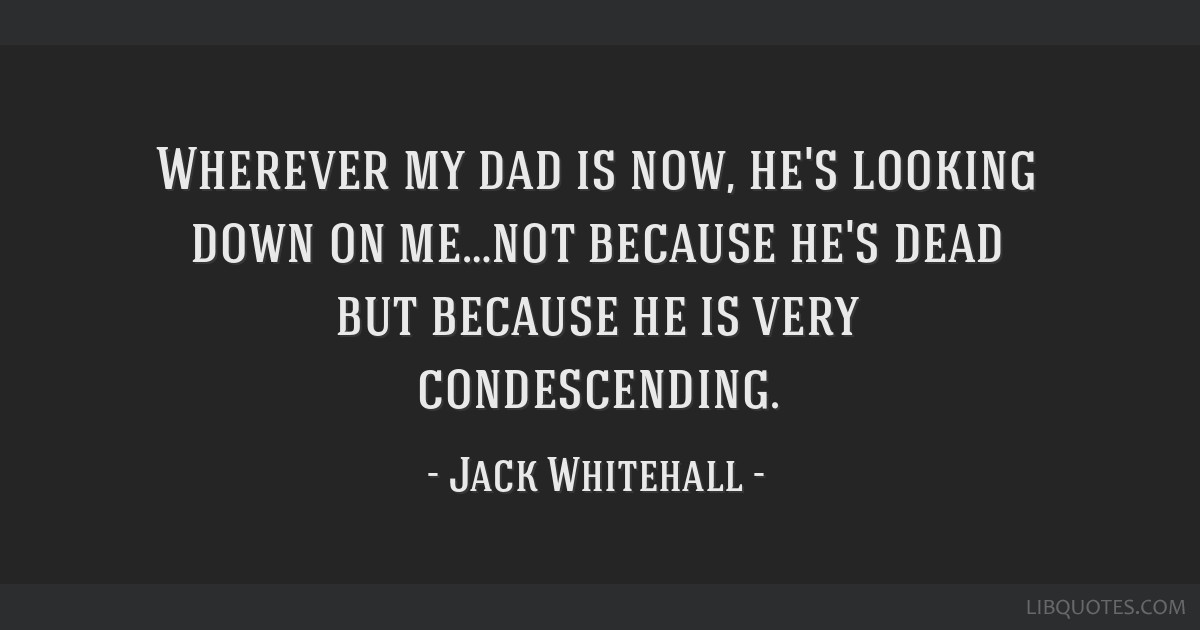
When Jack Whitehall says, “I’m sure wherever my dad is, he’s looking down on us. He’s not dead, just very…” — he’s not just delivering a punchline. He’s exposing the uncomfortable, awkward, and often hilarious truths about family, work ethics, and the masks we wear in everyday life. This single quote, often shared as a quote of the day, transcends comedy. It holds a mirror to modern work culture, the illusion of perfection, and the quiet struggle to be honest — with others, and more importantly, with ourselves.
Whitehall’s delivery — a mix of dry wit, self-awareness, and emotional detachment — makes the line land with both laughter and reflection. But beneath the humor lies a deeper commentary on how we navigate honesty, perform professionalism, and misunderstand human nature in high-pressure environments.
Let’s unpack what this quote really says about modern life — and why it resonates far beyond the stand-up stage.
The Comedy of Denial: Why We Laugh at Whitehall’s “Dead But Not Dead” Dad
Jack Whitehall’s joke hinges on a universal human behavior: denial. “He’s not dead, just very…” implies a refusal to acknowledge a painful truth — not just in family dynamics, but in workplaces, relationships, and self-perception.
We laugh because it’s familiar. - The coworker who’s technically on vacation but still answering Slack messages at 2 a.m. - The manager who says, “We’re a family here,” while cutting departmental staff - The team meeting where everyone nods in agreement despite knowing the project is doomed
This kind of emotional dishonesty is rampant. Whitehall’s line exposes it with surgical precision. By pretending his father is “just very” something (distant? uninvolved? ignoring us?), he mirrors how we soften painful realities with euphemisms.
Real-World Example: A tech startup CEO announces, “We’re streamlining operations,” when they’re actually laying off 30% of the team. The phrase “streamlining” is the corporate version of “he’s not dead, just very…” — a socially acceptable way to avoid the weight of truth.
The danger? When denial becomes the default, trust erodes. Teams stop believing leadership. Colleagues hesitate to speak up. Innovation stalls.
Honesty in the Age of Performance
Whitehall’s comedy thrives on contrast: the polished public persona versus the chaotic private reality. That same tension defines modern work culture.
We’re expected to be: - Always “on” - Emotionally resilient - Positively aligned with company goals
But what happens when the reality is burnout, disengagement, or ethical discomfort?
Whitehall’s quote subtly challenges the performance culture. By joking about his dad “looking down on us,” he undercuts the idea of constant surveillance — whether familial or managerial. The joke works because we all feel watched, judged, and pressured to perform.
Workplace Manifestation: Employees fake engagement during team-building exercises. Managers inflate progress reports. Remote workers keep cameras on to prove they’re “working,” even if they’re just staring at a screen.
This performance-driven dishonesty has consequences: - Increased stress and anxiety - Lower psychological safety - Higher turnover
Practical Tip: Encourage “Whitehall-style” honesty in meetings — not the sarcasm, but the clarity. Instead of asking, “Is everyone good with this?” try: “What’s one thing you’re not saying right now?” This small shift opens space for real dialogue.
Work Culture Through a Comedic Lens
Jack Whitehall’s humor often revolves around class, entitlement, and generational disconnect — themes that directly translate to modern workplace dynamics.
His relationship with his father, Michael Whitehall, is a masterclass in mismatched expectations: - The old-school agent who believes in formalities and hierarchy - The millennial comedian who values authenticity and irreverence
Their dynamic is not unlike many manager-employee relationships today: - Boomers accustomed to rigid structures vs. Gen Z demanding flexibility - Legacy processes clashing with agile innovation - Respect earned through tenure vs. respect earned through contribution
Whitehall’s “quote of the day” moment captures this divide. “He’s looking down on us” suggests authority, surveillance, and judgment — all common feelings in top-down cultures.
Use Case: Bridging the Gap A marketing firm led by traditional executives struggles to retain young talent. After introducing reverse mentoring — where junior staff teach seniors about digital culture — the team reports higher morale. The shift? Moving from “looking down” to “looking across.”
The lesson: Work culture improves when hierarchy is questioned, not worshipped.
Human Nature and the Need for Narrative
Why do we cling to phrases like “he’s looking down on us”? Because humans are hardwired for narrative.
We create stories to: - Make sense of absence - Justify authority - Soften emotional blows
Whitehall’s joke works because it subverts the sacred narrative of paternal guidance. Instead of reverence, we get irony. Instead of closure, we get a shrug.
This reflects a broader cultural shift: - From unquestioned authority to skeptical inquiry - From blind loyalty to negotiated trust - From myth to meta-commentary
In the workplace, this means: - Employees no longer accept “because I said so” - Brand messaging must withstand public scrutiny - Leadership must be transparent, not just visible
Common Mistake: Companies that craft “vision statements” with lofty language but no action. These become the corporate equivalent of “he’s not dead, just very…” — emotionally resonant but ultimately hollow.
Workflow Tip: When drafting internal communications, run them through the “Whitehall Test”: Could this be sarcastically quoted at a comedy club? If yes, it might lack authenticity.
The Power of Comedic Truth in Leadership
Great comedians like Jack Whitehall aren’t just entertainers — they’re cultural analysts. Their job is to point out the absurd, the uncomfortable, and the unspoken.
Leaders would do well to listen.
Comedy reveals: - The gap between policy and practice - The tension between image and reality - The emotional cost of pretending
Whitehall’s quote, in its brevity, does what hours of corporate training often fail to: it makes us confront our avoidance of truth.
Example in Action: A CEO opens a town hall by saying, “I know last quarter was rough. I’m not going to stand here and say ‘we’re all in this together’ while I get a bonus and you get overtime. Let’s talk honestly about what went wrong.” The result? Higher engagement, not less.
Honesty, even when awkward, builds credibility.
How to Apply Whitehall’s Wisdom in Real Life
You don’t need to be a comedian to use humor as a tool for honesty. But you do need courage.
Here’s how to integrate the spirit of Whitehall’s quote into daily professional life:
- Name the Elephant
- Instead of ignoring tension, acknowledge it: “This feels awkward. Let’s talk about why.”
- Replace Jargon with Clarity
- Ditch “circle back” and “synergy.” Say what you mean.
- Reward Candor, Not Just Compliance
- Praise employees who speak up, even if they’re critical.
- Use Humor Strategically
- A well-placed joke can ease tension — but never at the expense of someone’s dignity.
- Admit When You’re “Not Dead, Just Very…”
- Leaders who say, “I don’t have the answer” gain more trust than those who pretend they do.
Why This Quote Endures
Jack Whitehall’s line isn’t just funny — it’s diagnostic. It diagnoses our collective discomfort with truth, our obsession with image, and our need for emotional shortcuts.
It resonates because: - It’s relatable across generations - It uses humor to disarm defensiveness - It reveals more than it states
In a world of polished LinkedIn posts and corporate mission statements, this quote stands out for its messiness. And that’s precisely why it works.
Final Thought: The next time you’re in a meeting where everyone agrees but no one believes, remember Whitehall’s words. Maybe your boss isn’t dead — just very disengaged. Maybe the plan isn’t brilliant — just very approved. The first step to fixing anything is calling it what it is.
Be the person who does.
FAQ
What is the real meaning behind Jack Whitehall’s “he’s not dead, just very” quote? It’s a satirical take on denial and emotional avoidance, using humor to highlight how we soften harsh truths in personal and professional life.
How does Jack Whitehall use comedy to comment on work culture? Through exaggerated contrasts — like his posh, detached father — he mirrors hierarchical, performative, and emotionally dishonest workplace dynamics.
Can humor improve workplace honesty? Yes, when used appropriately. Self-deprecating or observational humor can break tension and open space for real conversation.
Why do people share this quote as a “quote of the day”? Because it’s short, funny, and layered — perfect for sparking reflection on family, leadership, and authenticity.
What can leaders learn from Jack Whitehall’s comedic style? That transparency and humility — even with a wink — build more trust than polished perfection.
Is the quote about his dad literal or metaphorical? It’s both. Literally, it references his real father, Michael Whitehall. Metaphorically, it symbolizes distant authority figures in organizations.
How can I apply this quote’s lesson in team communication? By naming unspoken issues, avoiding euphemisms, and encouraging candid dialogue — even if it starts with a joke.
FAQ
What should you look for in Jack Whitehall’s Quote of the Day on Life, Honesty, and Work? Focus on relevance, practical value, and how well the solution matches real user intent.
Is Jack Whitehall’s Quote of the Day on Life, Honesty, and Work suitable for beginners? That depends on the workflow, but a clear step-by-step approach usually makes it easier to start.
How do you compare options around Jack Whitehall’s Quote of the Day on Life, Honesty, and Work? Compare features, trust signals, limitations, pricing, and ease of implementation.
What mistakes should you avoid? Avoid generic choices, weak validation, and decisions based only on marketing claims.
What is the next best step? Shortlist the most relevant options, validate them quickly, and refine from real-world results.