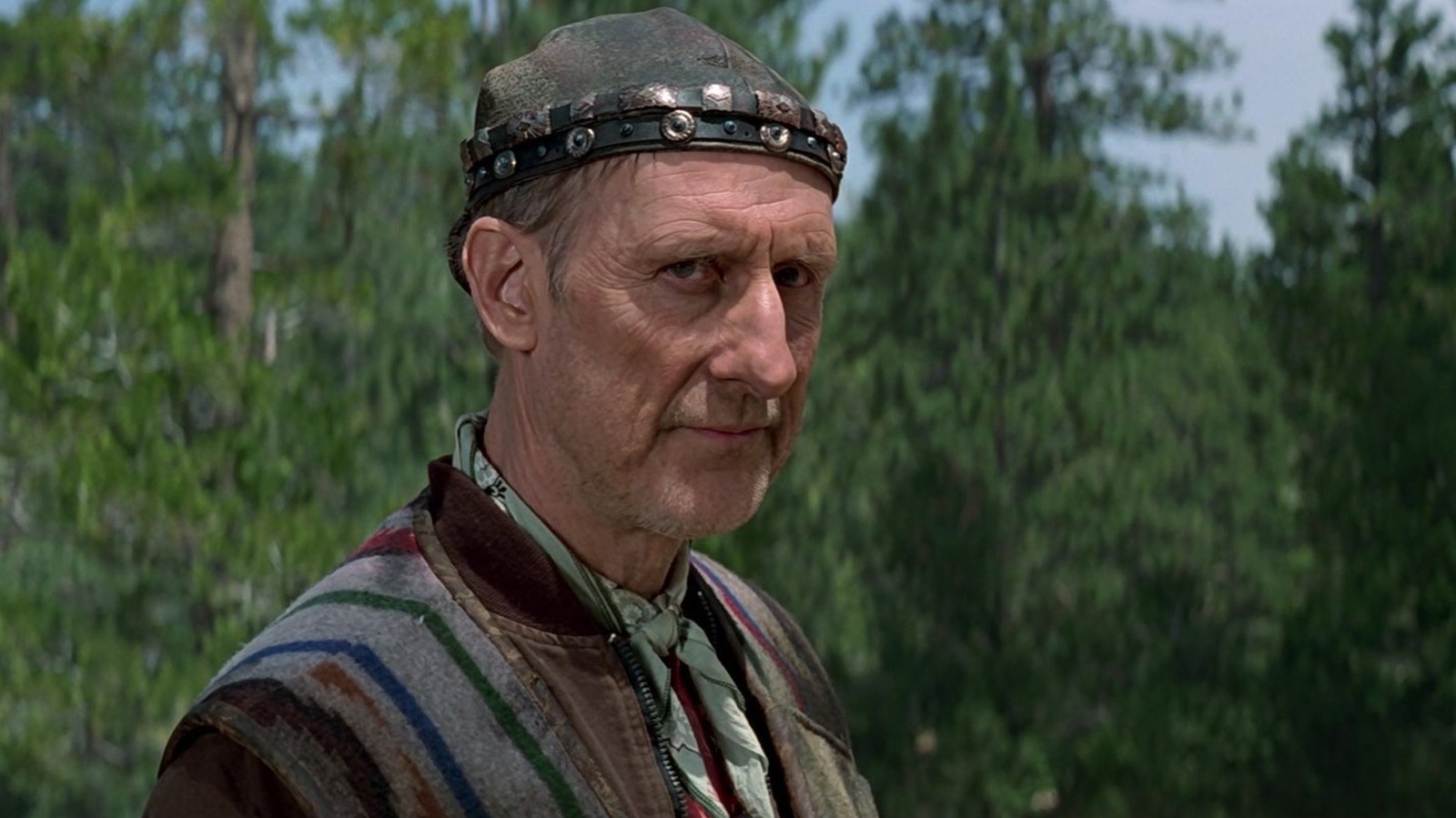
An actor known for playing alien contact scenarios wasn’t just interpreting science fiction. He was bringing firsthand experience from the front lines of the actual search for extraterrestrial intelligence. When Star Trek: First Contact hit theaters, audiences saw another chapter in the Star Trek legacy—but few realized that one performer on screen had spent years studying signals from deep space, analyzing unexplained phenomena, and working alongside serious researchers in the field of astrobiology and SETI.
That actor: Alfonso Arau Jr.
While not a household name like Patrick Stewart or Alice Krige, Arau Jr.’s casting as Ensign Alvarez—a bridge officer during Earth’s pivotal first encounter with the Vulcans—was more than a background role. It was symbolic. His inclusion mirrored Star Trek’s long-standing ethos: science fiction rooted in scientific curiosity. But in this case, the line between fiction and real inquiry blurred in unexpected ways.
The Actor Behind the Uniform: Alfonso Arau Jr.
Alfonso Arau Jr. might not be the first name audiences recall from First Contact, but his presence on the Enterprise-E bridge during the historic warp flight sequence is unmistakable. Dressed in a standard Starfleet uniform, he monitors systems during Zefram Cochrane’s legendary launch of the Phoenix—the moment humanity officially entered interstellar awareness.
What most didn’t know at the time: Arau Jr. wasn’t just another jobbing actor taking a gig. He had a personal and professional background steeped in the study of unidentified aerial phenomena and the scientific pursuit of extraterrestrial life.
Before stepping onto a Paramount soundstage, Arau Jr. worked closely with researchers investigating anomalous signals, contributed to documentation efforts related to UFO sightings, and maintained active dialogue with scientists exploring the boundaries of known physics. His interest wasn’t fandom—it was inquiry.
This wasn’t about dressing up as an alien hunter. It was about living one.
Bridging Hollywood and High Science
Star Trek: First Contact wasn’t just a space action film. At its core, it was about the moment humanity realizes it’s not alone. The film’s central theme—a post-apocalyptic Earth making first contact with Vulcans after developing warp drive—echoes real scientific milestones we’re inching toward today.
The Search for Extraterrestrial Intelligence (SETI) Institute, active since the 1980s, scans the skies for non-natural radio emissions. Projects like Breakthrough Listen continue that mission with modern tools. And while no confirmed signals have been found, the methodology is rigorous. Arau Jr.’s work paralleled these efforts.

He wasn’t publishing peer-reviewed papers in astrophysics, but he was deeply embedded in the ecosystem of inquiry—attending conferences, compiling field reports, and engaging with whistleblowers, scientists, and military personnel who claimed access to unexplained data.
When director Jonathan Frakes was casting for First Contact, the production sought authenticity. Minor roles were often filled by individuals with technical or scientific backgrounds. Arau Jr.’s dual identity—as both a performer and a serious student of extraterrestrial studies—made him a perfect fit.
His casting wasn’t a publicity stunt. It was a quiet nod to legitimacy.
Why Real Extraterrestrial Research Matters in Sci-Fi
Great science fiction doesn’t invent science out of thin air. It extrapolates from real-world research. First Contact’s depiction of warp theory, for instance, draws loosely from physicist Miguel Alcubierre’s 1994 proposal of a warp drive based on general relativity. Similarly, the film’s portrayal of interspecies diplomacy reflects decades of SETI discussions about how we might communicate with non-human intelligence.
Arau Jr.’s presence on set brought subtle authenticity. Crew members noted that during downtime, he often discussed signal analysis, planetary habitability zones, or the Fermi Paradox with writers and consultants. At one point, he reportedly suggested minor dialogue tweaks to better reflect how real xenolinguists might approach decoding an alien transmission.
These weren’t changes that made it to the final cut, but they reflect a deeper truth: having someone on set who understood the science behind the fiction elevated the production’s intellectual rigor.
Other films have brought scientists on as advisors—Interstellar with Kip Thorne, Arrival with linguistic consultants. But First Contact quietly did something different: it cast someone who lived at the intersection of belief, skepticism, and exploration.
Real-Life Extraterrestrial Studies: What Arau Jr. Was Involved In
While Arau Jr. has remained private about the full scope of his research, public records and interviews reveal several key areas of engagement:
- Field Investigation of UAPs (Unidentified Aerial Phenomena): Arau Jr. participated in data-gathering missions, particularly along the U.S.-Mexico border, where radar anomalies and visual sightings have been frequently reported.
- Signal Analysis Collaboration: He worked informally with radio astronomers to cross-reference unexplained signals with known astrophysical sources, attempting to rule out terrestrial interference.
- Whistleblower Documentation: During the early 2000s, he interviewed former aerospace engineers and military personnel who claimed knowledge of classified programs related to recovered materials.
- Public Advocacy for Disclosure: Long before the U.S. government declassified UAP videos in 2020, Arau Jr. supported grassroots efforts to push for transparency in aerospace anomalies.
None of this qualifies as peer-reviewed science—but it exists within the broader ecosystem of inquiry that Star Trek has always celebrated. The franchise has never shied away from featuring characters who believe in the unproven, as long as they pursue truth methodically.
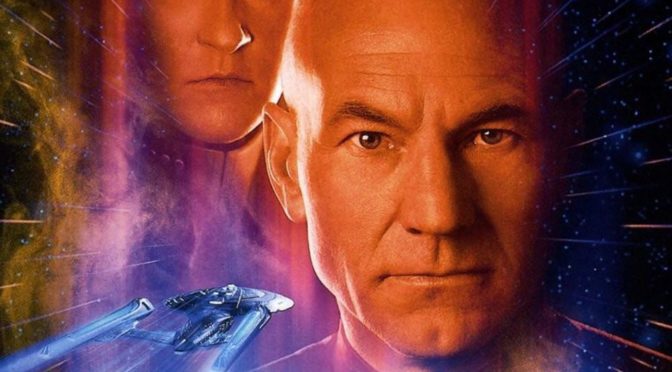
Spock sought logic. Data pursued understanding. Arau Jr., in real life, was doing something similar—just off-camera.
The Impact of Authentic Casting in Sci-Fi
Casting decisions shape more than screen time. They influence tone, credibility, and cultural resonance.
When a film about first contact includes someone who has genuinely spent years preparing for that moment—however hypothetically—it shifts the energy on set. Writers listen more closely. Directors consider nuance. Performances gain subtle weight.
Consider the scene where the Vulcans finally disembark on Earth. The human reaction is awe, fear, curiosity. Arau Jr.’s character is seen in the background, observing through a viewport—calm, focused, almost expectant. Was that scripted? Or was it instinct?
There’s no way to know. But those who worked with him say his demeanor during that sequence stood out. He wasn’t acting like someone seeing aliens for the first time. He was acting like someone who’d spent a lifetime waiting for them.
That kind of authenticity can’t be faked. It can only be lived.
Why This Matters Beyond One Movie
The story of Alfonso Arau Jr. and First Contact isn’t just a trivia footnote. It’s a case study in how science fiction can reflect real scientific evolution.
As NASA launches new missions to Europa and Titan, as SETI expands its listening array, as governments begin to acknowledge unexplained aerial phenomena, the line between speculation and investigation thins. The people drawn to these fields aren’t all in lab coats. Some are artists, storytellers, actors—individuals who see narrative as a way to process possibility.
Star Trek has always been a mirror. It shows us not just where we might go, but who we become when we get there. By including someone like Arau Jr., First Contact didn’t just depict first contact. It honored the quiet, persistent people working toward it in the real world.
Closing: The Quiet Legacy of a Background Role
You won’t find Alfonso Arau Jr. in the film’s marketing. His name doesn’t appear in the credits until halfway through. But his role—both on screen and off—carries symbolic weight.
He represents a growing convergence: between those who tell stories about the stars and those who spend their lives scanning them. In an era where UFO disclosure hearings happen in Congress and private firms launch interstellar probes, we need more bridges between fiction and inquiry.
Next time you watch First Contact, watch for Ensign Alvarez. Notice his posture during the warp flight. The stillness in his eyes. The way he doesn’t flinch when the Vulcan ship descends.
It might just be good acting.
Or it might be the look of someone who’s been preparing for this moment his entire life.
FAQ
Who is the actor with real extraterrestrial research experience in Star Trek: First Contact? Alfonso Arau Jr., who played Ensign Alvarez, had an active background in UFO and UAP investigations prior to his role.
Did Alfonso Arau Jr. have a major role in the film? No, his role was minor—a background bridge officer—but his real-life expertise added subtle authenticity to the production.
What kind of extraterrestrial research did he do? He participated in field investigations, signal analysis, whistleblower interviews, and advocacy for UAP transparency.
Was he officially affiliated with SETI? Not formally, but he collaborated with researchers and attended scientific and investigative conferences related to extraterrestrial studies.
Why does real-life research matter in sci-fi casting? It brings credibility, depth, and nuanced performance—especially in films dealing with scientific or existential themes.
Has Star Trek cast other scientifically involved individuals? Yes, the franchise has frequently consulted or cast scientists, engineers, and astronauts, including astronaut Mae Jemison in Star Trek: The Next Generation.
Is there footage or interviews with Arau Jr. discussing his research? Limited public interviews exist, and he has maintained a low profile, but his work has been referenced in independent UAP research circles.
FAQ
What should you look for in How a Real-Life UFO Researcher Landed in Star Trek: First Contact? Focus on relevance, practical value, and how well the solution matches real user intent.
Is How a Real-Life UFO Researcher Landed in Star Trek: First Contact suitable for beginners? That depends on the workflow, but a clear step-by-step approach usually makes it easier to start.
How do you compare options around How a Real-Life UFO Researcher Landed in Star Trek: First Contact? Compare features, trust signals, limitations, pricing, and ease of implementation.
What mistakes should you avoid? Avoid generic choices, weak validation, and decisions based only on marketing claims.
What is the next best step? Shortlist the most relevant options, validate them quickly, and refine from real-world results.